Commercial Waste Maidenhead — Recycling and Sustainability
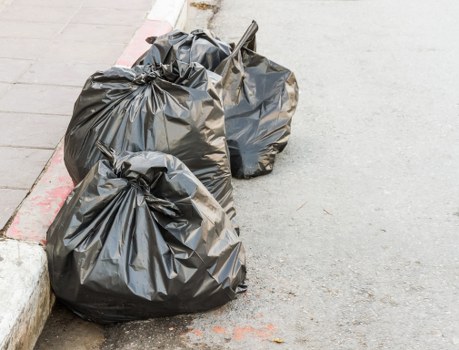 Commercial Waste Maidenhead is committed to creating an eco-friendly waste disposal area that supports local business, protects green spaces and reduces carbon emissions across the borough. This page outlines our sustainability approach, measurable targets and the practical steps we take to make Maidenhead a leader in responsible waste management. We work with local authorities, community organisations and waste transfer facilities to deliver scalable, verifiable improvements in commercial waste handling.
Our strategy for commercial waste in Maidenhead balances operational efficiency with long-term environmental goals. We set a clear recycling percentage target for the coming years: an initial ambition of 65% recycled or reused material from commercial collections within 36 months, rising incrementally to 75% by 2030. These figures reflect a realistic but ambitious roadmap for reducing landfill reliance and creating a true sustainable rubbish area that benefits businesses and residents alike.
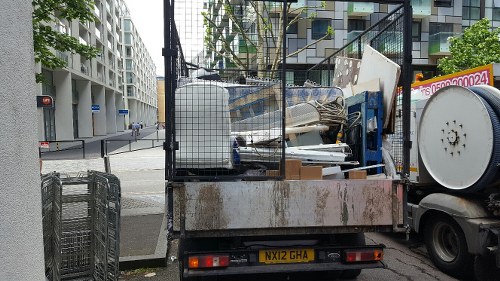 The borough's approach to waste separation informs our practices: many local businesses already separate dry recycling, food waste and general refuse at source, following the Royal Borough of Windsor & Maidenhead guidelines. We support this by providing tailored collection contracts for paper, cardboard, glass, plastics, metals and food organics. We also coordinate with local transfer stations to ensure materials move quickly into appropriate recycling streams rather than into mixed waste.
Partnerships with charities and reuse networks are central to our reuse-first model. We collaborate with local charities to divert usable goods — furniture, textiles, office equipment and surplus materials — from disposal into community reuse schemes. These partnerships create social value, reduce waste volumes and extend product lifecycles. Working with charity partners also means materials that can be reused are assessed quickly and redistributed, lowering processing costs and supporting local causes.
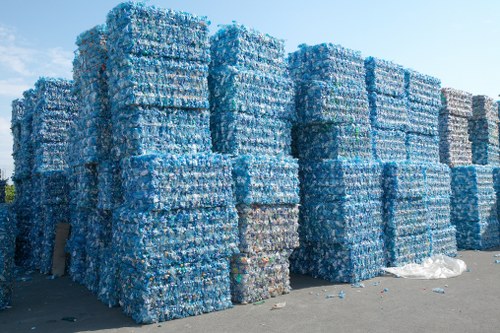 A low-carbon fleet is a cornerstone of our on-the-ground delivery. We operate a growing number of electric and hybrid low-emission vans for collections and transfers; where electric charging infrastructure is limited, we use Euro 6 diesel vehicles with particulate filters and route-optimisation software. These investments reduce the emissions footprint of commercial collections and support cleaner air in business districts and industrial parks across Maidenhead.
To make these ambitions practical, our waste logistics rely on a network of nearby transfer stations and materials recovery facilities (MRFs). Key local transfer stations accept segregated loads — cardboard, mixed dry recycling, glass and food waste — and prepare them for onward recycling. Benefits include reduced double-handling, faster turnaround for businesses and improved material quality for processors. The strategy also minimises vehicle miles, reinforcing the low-carbon commitment.
We provide clear separation protocols for clients to improve capture rates and minimise contamination. For commercial waste in Maidenhead, our standard separation categories include:
- Dry recycling: cardboard, paper, mixed plastics, cans
- Glass: bottles and containers
- Food and organic waste: bakery, produce, catering wastes
- Bulky and reuse items: furniture, equipment for charity partners
- Hazardous and electronic waste: handled via dedicated streams
These categories reflect the boroughs' approach to waste separation and make it easier for companies to participate in local recycling schemes. Maidenhead commercial waste is therefore managed with practical, business-friendly rules that drive higher recycling performance.
Measuring Progress and Reporting
We monitor outcomes using transparent KPIs: percentage recycled, tons diverted from landfill, number of charity reuses and fleet emissions reduction. Monthly and quarterly reporting for clients ensures targets are visible and allows for continuous improvement. Our target of 65% recycled in the short term is supported by route audits, contamination checks and on-site staff training to improve source separation behaviour across diverse commercial sectors.To support sustainability in the local economy we maintain partnerships with materials processors, transfer stations and social enterprises. Regular audits of the transfer stations ensure that the eco-friendly waste disposal area we use meets high environmental and safety standards. We also invest in education for site staff and client teams so that the sustainable rubbish area concept is applied consistently, from small retailers to large offices and light industrial sites.
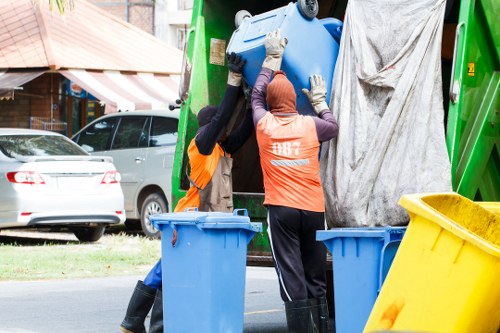 Logistics choices matter: by prioritising nearby transfer stations and optimising collection schedules we reduce unnecessary mileage and lower the carbon intensity of commercial waste services. Our low-carbon vans are complemented by strategic consolidation hubs that allow multiple small collections to be combined before making the trip to a materials recovery facility, further improving overall efficiency.
 In summary, Commercial Waste Maidenhead delivers a practical, accountable and community-focused approach to waste and recycling. Through ambitious recycling percentage targets, strong charity partnerships, collaboration with local transfer stations and a low-emission vehicle fleet, we help businesses achieve operational needs while advancing the region's sustainability goals. Our commitment is to continue improving material capture, reduce waste-related emissions and expand circular-economy opportunities across Maidenhead.
